




Suzy Ultman Chooses Joy
Suzy Ultman had been making books for years, but it was because of a particularly nondescript holiday card that she felt she needed to make something Jewish.
“My mom sent me a Rosh Hashanah card, and it’s really boring,” she said. “It’s just like a photograph of apples.”
She noticed a contemporary Jewish voice was missing across the U.S., particularly in early children’s books. She set out to pitch a series.
“There’s got to be something between Hanukkah and the Holocaust,” she said. “We’re so much more.”
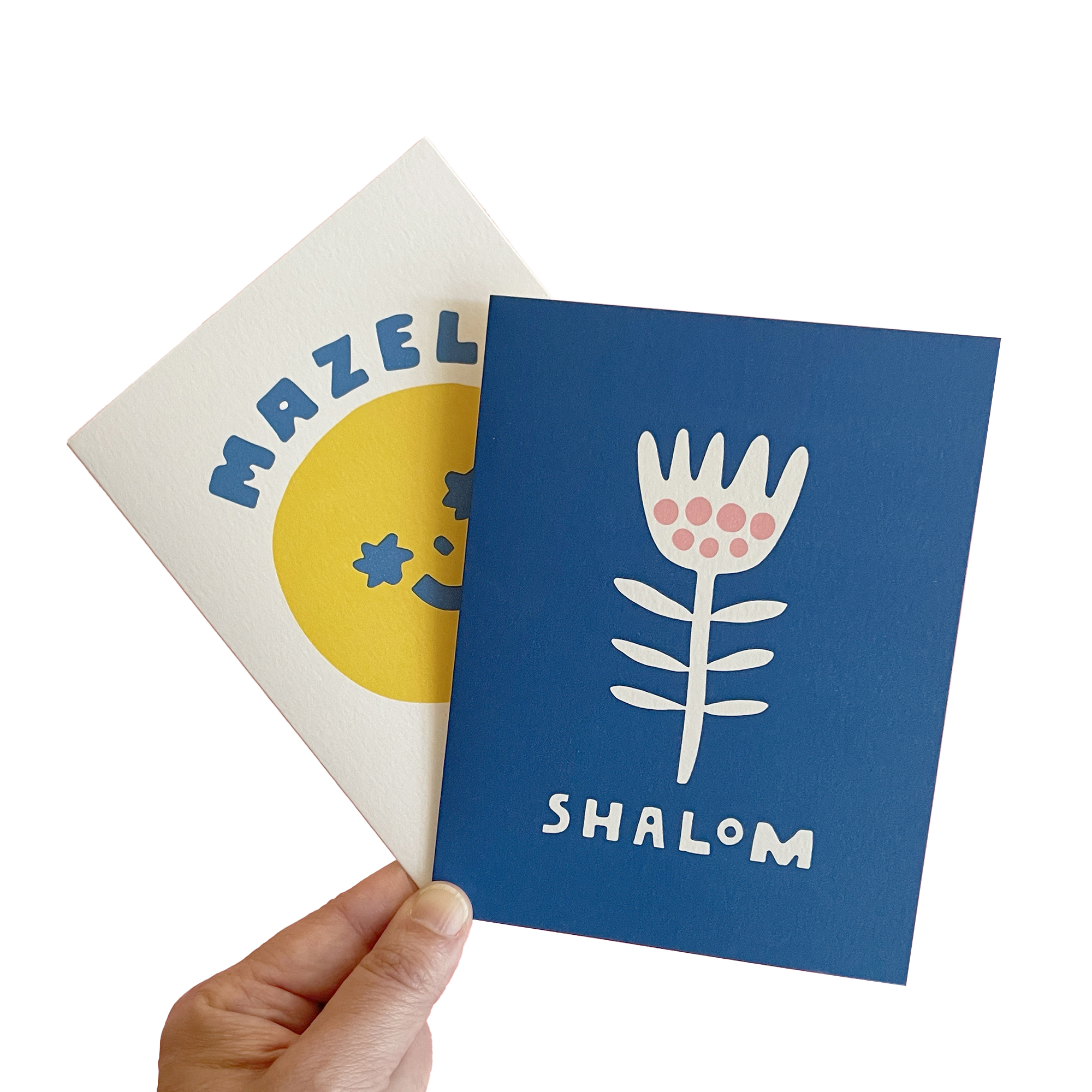
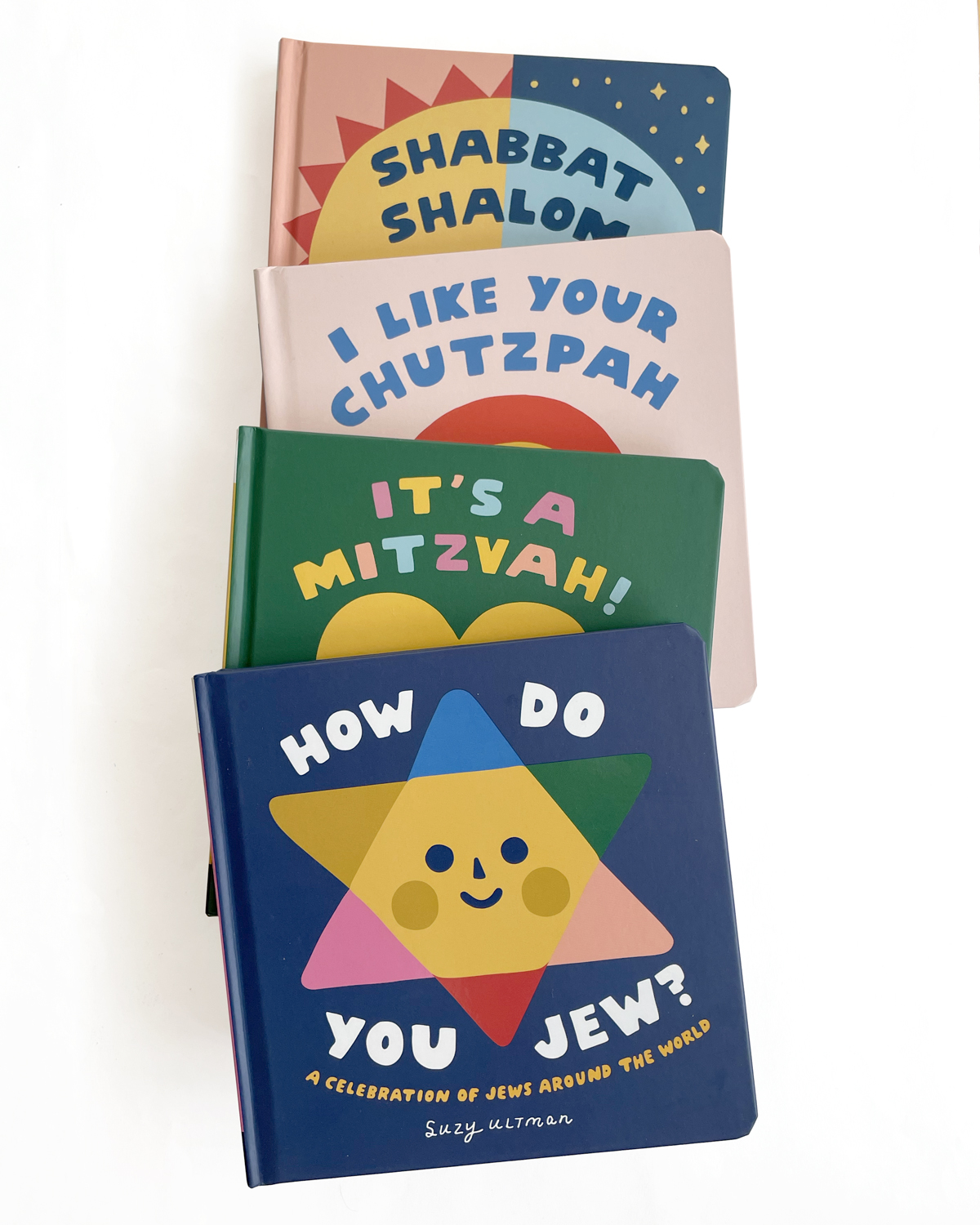
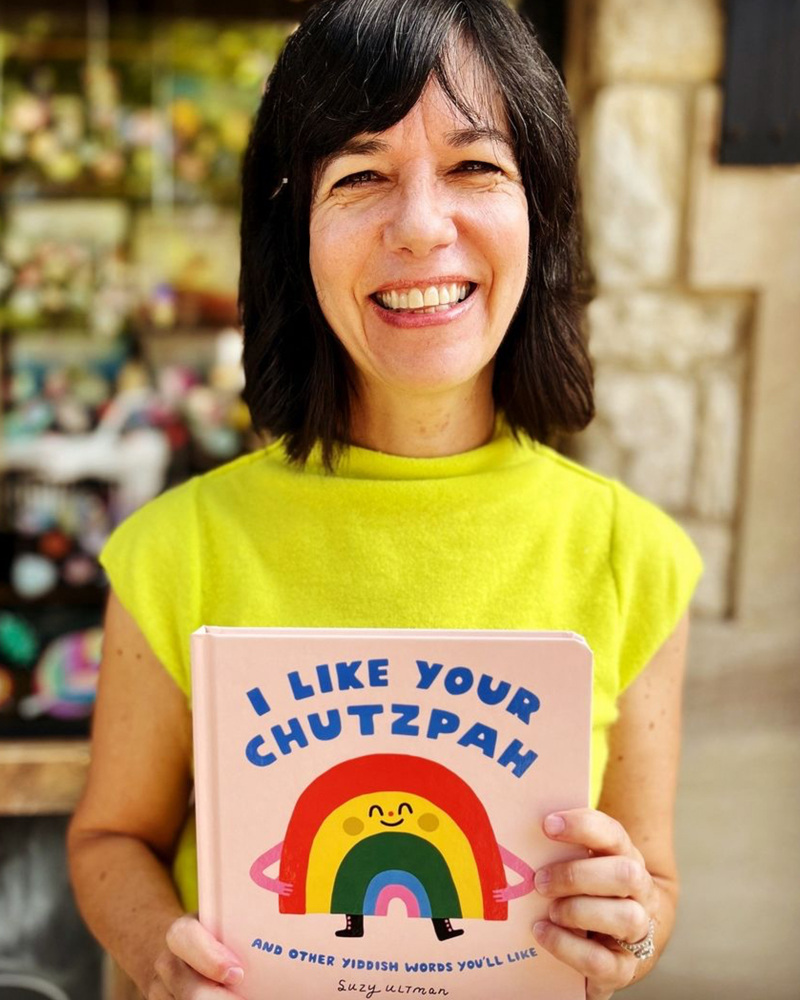
She released the first in that series in 2024 with I Like Your Chutzpah, walking through a selection of Yiddish words with colorful illustrations and playful English definitions. She continued with Shabbat Shalom, It’s a Mitzvah! and How Do You Jew? in a similar style.
She’s forged a career as an artist and author focused on contemporary Jewish life, with a joyful aesthetic and vibrant color. But her explorations of the present-day have also led her to think deeply on her family’s stories and history.
Suzy grew up in State College, Pennsylvania, the town housing Penn State University, in a small but tight-knit Reconstructionist community. Her family had roots in Chicago, and before that, Austria.
She said her grandparents typically did not talk about what their lives in Europe were like. There were two main stories she heard that greatly shaped her view of the past.
Her father’s grandparents left Vienna following Kristallnacht. They survived because her grandfather’s boss, who was not Jewish, warned him to leave work early and keep the family indoors.
The family began making plans to escape Austria after that. They decided Suzy’s grandmother didn’t look as Jewish as everyone else, so they would send her out to the U.S. embassy.
She would dig through a directory there, looking through last names, and bring back mailing addresses for any names that sounded Jewish. Her grandfather would write letters to those people, explaining the situation.
Eventually, it worked. He found two people to vouch for them and the man who would hire him in Chicago as a sponsor, all of which were needed to leave for America.
They went first to the Netherlands, staying in Groningen, before getting to America. They arrived in 1939, with papers marked as being from “Vienna, Germany,” and settled in Chicago.
This story was full of hope and inspired her, Suzy said, but she also knew from a young age there was sadly more to it.
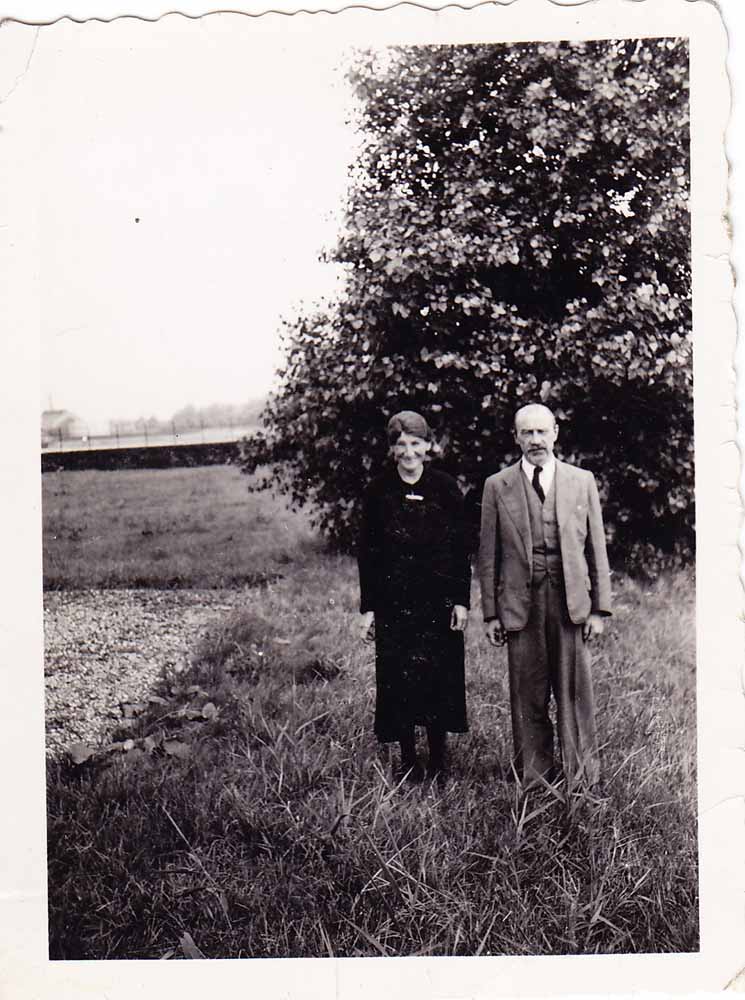
Pictured: Suzy Ultman’s great-grandparents in Holland.
When Suzy was about seven years old, her parents took a trip to the Netherlands. They went to check the state files and find out what happened to Suzy’s grandmother’s parents, who never made it to America.
The records and locals of the town confirmed what they had always suspected. The Nazis came one day and took every Jewish person they could find to Auschwitz. She said the family knew that with their old ages, her great-parents would have been some of the first to be killed.
Even as a young girl, it dawned on Suzy that her grandmother was only now finding out what happened to her own parents, and her father for his grandparents.
“All these years had passed,” she said. “And she didn’t know.”
For the most part, these two stories would be the main sources of information Suzy had on what life was like for her grandparents back in Austria and the Netherlands.
“I think I’m always still working with those two pieces,” she said.
While Suzy was living in Amsterdam, she said the full weight of what happened to her great-grandparents really settled in.
“I wish we knew more about their story,” she said. “Even the hard stuff.”
The apartment where her great-grandparents last lived in the Netherlands is now marked by the Stumbling Stones project.
From the family, only Suzy’s great-aunt returned to Vienna after the war.
While she’s visited Vienna only briefly years ago, Suzy said she’d like to visit again soon and feels connected through her family’s story, rather than alienated, to much of Austrian culture.
“My grandmother had a piece of edelweiss in a book. She told me that my grandfather had given it to her,” she said. “They took very few things from Vienna, but that was one.”
Another remnant of the culture was the way her grandmother baked sweets with apricot jam, she said, a rarity in the U.S.
“Visiting made it all make sense,” she said.
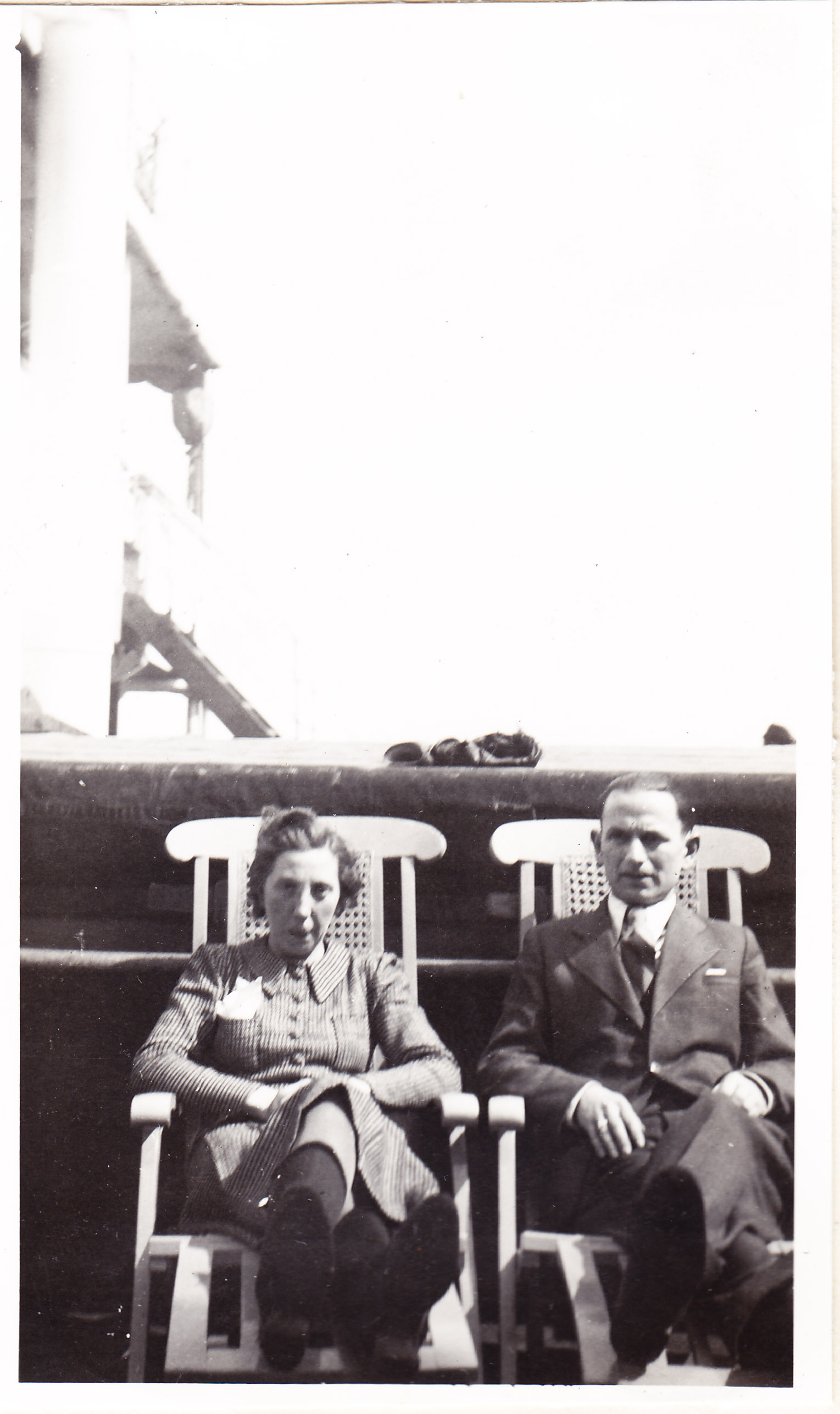
Pictured: Suzy Ultman’s grandparents on the boat to America in 1939.
“I think I’m always still working with those two pieces.”
This year, Suzy has another children’s book coming out, inspired by childhood outings in Chicago with her grandparents. They would take her and the family out to a shop called The Pickle Barrel, where locals would dig through a barrel to find the perfect pickle to purchase.
Titled I HEART PICKLES, the book is also inspired by her mother’s parents, who ran a deli.
“It’s an ode to both sets of grandparents,” Suzy said.
I HEART PICKLES is available starting Oct. 6.
Suzy also has a book for adults, The Art of Jewish Joy: Crafts and Activities for Celebration and Connection, set to be released Oct. 18.
It’s her first lifestyle book, exploring how to celebrate, practice, and create things for Jewish holidays and as expressions of general culture. The book was created collaboratively with the author Amanda Klingoff, known for her DIY kids crafting projects.
“If you want to write a kids book, just keep at it. The people to support you are out there.”
While still most at home in the visuals, Suzy said she’s learned to embrace her writing voice through the years as well.
“I’ve grown a lot,” she said. “When I first was making books, I was thinking about the visual piece first because the words scared me.”
In the past years working on her Jewish children’s series, she said she let go of that, particularly while writing Shabbat Shalom.
That story captured the specific feelings she felt going over to her grandparents’ house every Friday evening, she said.
This approach worked better than trying to force the story into something more explanatory or general, and the right messages got through via her personal story regardless.
“It stayed with me,” she said. “The way I celebrate Shabbat changes and evolves, but the main theme stays: a pause.”
Suzy said both Jews and non-Jews have been supportive of her work so far, and she hopes her work is opening a pathway for more Jewish authors to thrive.
“If you want to write a kids book, just keep at it,” she said. “The people to support you are out there.”
Whether through the writing process of her books or in her family life, Suzy has been figuring out her place in all these stories.
Growing up, she heard that her grandfather kept money hidden in the mattress, just in case what happened to his family in Austria ever occurred again. She always thought it was metaphorical.
But, some time after her grandfather had died, Suzy’s father came to her holding a roll of gold coins.
Suzy decided they should keep the gold as a family heirloom, a way to connect with their family’s history, no matter how difficult.
She said she could see herself becoming more of the family historian as her family gets older, already keeping track of documents and items like this. On her mother’s side, the family fled Lithuania during pogroms in the early 1900s.
She said she knows less about them but marvels still at their journey out of Europe.
“I’m just so thankful for all the people that are working in the museum, archiving all this stuff,” she said. “Because it will get lost if we don’t do that.”
She said her work now feels like the best way for her to contribute. She provides a contemporary voice to the conversation, able to add light and color to a story that often gets so dark.
“It’s my responsibility to keep that light moving forward,” she said.
All images courtesy of Suzy Ultman.
Article by Joe Youorski for the US Friends of the Jewish Museum Vienna.
Support the work of the Jewish Museum Vienna with a donation today.
Keep the story of Vienna’s Jewish culture going forward into the future.