


Everything Forgotten
Wednesday, January 28th - Thursday, September 17th | Museum Judenplatz, Judenplatz 8, A-1010 Vienna
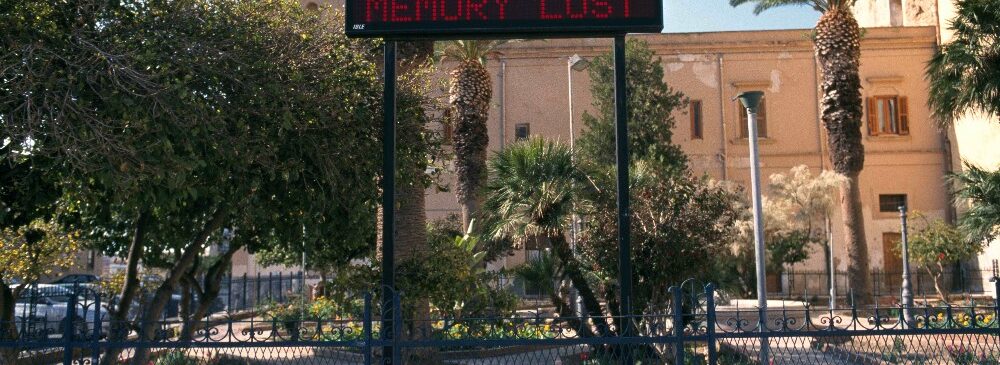
The Hebrew words lishkoach, meaning to forget, and koach, referring both to power and strength, rhyme and reveal the dual nature of forgetting. The exhibition Everything Forgotten looks at the power but also the powerlessness of forgetting from a cultural history perspective and asks whether it merely denotes loss, or whether it can also be a form of liberation.
The power of forgetting is used in different ways and leaves those who are forgotten powerless. Within Jewish communities, excommunication (cherem) is the most severe rabbinical sanction. It is meant not only to exclude the person concerned but also to extinguish all memory of them. External enemies can also be consigned to oblivion. The curse yimach shemo (may his name be erased) is reserved for individual enemies of the Jewish people.
Nazi extermination policy aimed not only to eliminate the Jewish population but also to destroy proof of the mass murder. When the concentration and extermination camps were liberated, the only evidence to survive was the material that the Nazis had not been able to destroy. And after 1945, many Austrians wanted to forget the past and their part in it. This culture of forgetting did not change until the Waldheim affair in 1986.
At a time when historical responsibility and memory are increasingly questioned, it is important to discuss the mechanisms of forgetting and to ask what has been suppressed, overlooked, or deliberately erased. The exhibition invites visitors to consider forgetting not just as the opposite of remembering but as part of a complex confrontation with the past and the present.
Participating artists: Arnold Dreyblatt, Dani Gal, Esther Hovers, Brigitte Kowanz, Maya Schweizer, Sigrid Sigurdsson, William Utermohlen, Patrick Zachmann.
Curators: Daniela Pscheiden (JMW), Dinah Ehrenfreund-Michler (JMH)
Design and graphics: Fuhrer, Wien